
No products in the cart.



The most popular advice about TB-500 peptide capsules is also the least reliable: a capsule is not automatically a practical oral delivery system just because it contains a measured amount of peptide. For a laboratory, convenience matters only after the formulation demonstrates identity, integrity, release, degradation resistance, and measurable systemic exposure.
TB-500 is commonly discussed as a synthetic fragment related to thymosin beta-4, a 43-amino-acid protein studied in tissue repair and cell migration research. The parent molecule has a substantial scientific history, but that evidence shouldn't be transferred casually to commercial TB-500 capsules or marketed benefits. A review of thymosin beta-4 development describes early human studies of the parent molecule, while the available discussion of oral TB-500 continues to identify a major gap in human pharmacokinetic evidence.
This guide approaches oral peptide sourcing like a laboratory manager would. It focuses on what can be verified, which formulation variables matter, how a Certificate of Analysis should be examined, and where regulatory and procurement controls need to stop a questionable batch before it enters a research workflow.
A capsule shell can protect a powder from handling contamination, but it doesn't prove that the peptide will survive the gastrointestinal tract. Unmodified peptides face gastric acid, intestinal enzymes, limited permeability, and dilution before they could reach systemic circulation. A technical review of oral TB-500 notes that no peer-reviewed human pharmacokinetic study has demonstrated meaningful systemic oral bioavailability for intact TB-500.
That distinction separates a product format from a validated delivery route. A label may state a nominal amount of TB-500 per capsule, but the label doesn't establish how much intact material remains after digestion, how much crosses the intestinal barrier, or whether any recovered material is biologically relevant.
A serious evaluation starts with the formulation, not with a claimed outcome. The lab should establish that the capsule contains the intended compound, determine whether the shell releases it under relevant conditions, and test the material in simulated gastric and intestinal fluids. Only then does an in vivo study have a meaningful formulation baseline.
The core checks include:
Independent peptide discussions sometimes describe oral TB-500 exposure as expected to be below 5%, or potentially negligible without specialized encapsulation, but this benchmark should not be treated as a validated human result. The route comparison for TB-500 bioavailability presents that figure as an expectation, which is precisely why a laboratory should measure plasma recovery rather than convert a nominal capsule dose into a presumed systemic dose.
Practical rule: If a supplier cannot show how the formulation was tested through dissolution, degradation, and recovery stages, treat oral convenience as an unverified claim.
The most common procurement error is to compare capsule prices with lyophilized research material without comparing the evidence burden. A lower-cost capsule may create additional analytical work, while a higher-priced formulation with no release or pharmacokinetic data may still fail the same basic test. For TB-500 peptide capsules, research viability depends on measurable exposure, not on the appearance of the packaging.
Capsules and lyophilized powders solve different handling problems. A capsule arrives in a ready-to-count format, while a lyophilized vial requires controlled reconstitution and careful documentation. The capsule looks simpler at the bench, but its shell, excipients, moisture sensitivity, dissolution profile, and gastrointestinal degradation can add variables that aren't present in a straightforward identity and purity workflow.
A lyophilized powder doesn't automatically prove biological activity or clinical suitability. It does, however, give the laboratory a more direct material for analytical characterization and controlled preparation. The researcher can record the lot, reconstitution solvent, preparation conditions, aliquot handling, and analytical results instead of treating a capsule's nominal content as the complete experimental input.
| Format | Stability Profile | Research Viability |
|---|---|---|
| Capsule | Depends on shell integrity, moisture control, excipients, and protection against digestive degradation | Requires dissolution, simulated-fluid degradation, and recovery testing before systemic exposure can be assumed |
| Lyophilized peptide | Dry-state storage can support controlled handling when the manufacturer provides suitable stability information | More suitable for defined reconstitution, aliquoting, identity testing, and analytical method development |
A capsule can make sense for a formulation-development study. In that setting, the capsule itself is the subject of investigation, and the team should measure shell release, peptide integrity, and recovery. It becomes a weak choice when a researcher wants to infer a biological result from a nominal oral amount without first proving that the active chain survives the route.
Lyophilized material introduces its own discipline. Reconstitution requires a written procedure, a compatible solvent, controlled mixing, and a record of how long the solution remains in use. Researchers shouldn't assume that a powder is stable after reconstitution, and they shouldn't treat a clear solution as proof that the peptide remains chemically intact.
Capsules reduce preparation steps but can obscure the relationship between the labeled amount and the recovered analyte. Lyophilized vials increase preparation responsibility but often make the experimental input easier to define. For controlled in vitro work, analytical development, and preclinical formulation comparison, that distinction can determine whether a negative result reflects the compound, the formulation, or a failed delivery route.
A practical purchasing decision therefore begins with the study question:
The format should serve the question. It shouldn't dictate the conclusion before the lab has generated the evidence.
A Certificate of Analysis is a starting document, not a substitute for quality control. Before accepting a batch of TB-500 or another research peptide, the laboratory should confirm that the document belongs to the material received and that the reported methods can answer the questions the study actually asks.
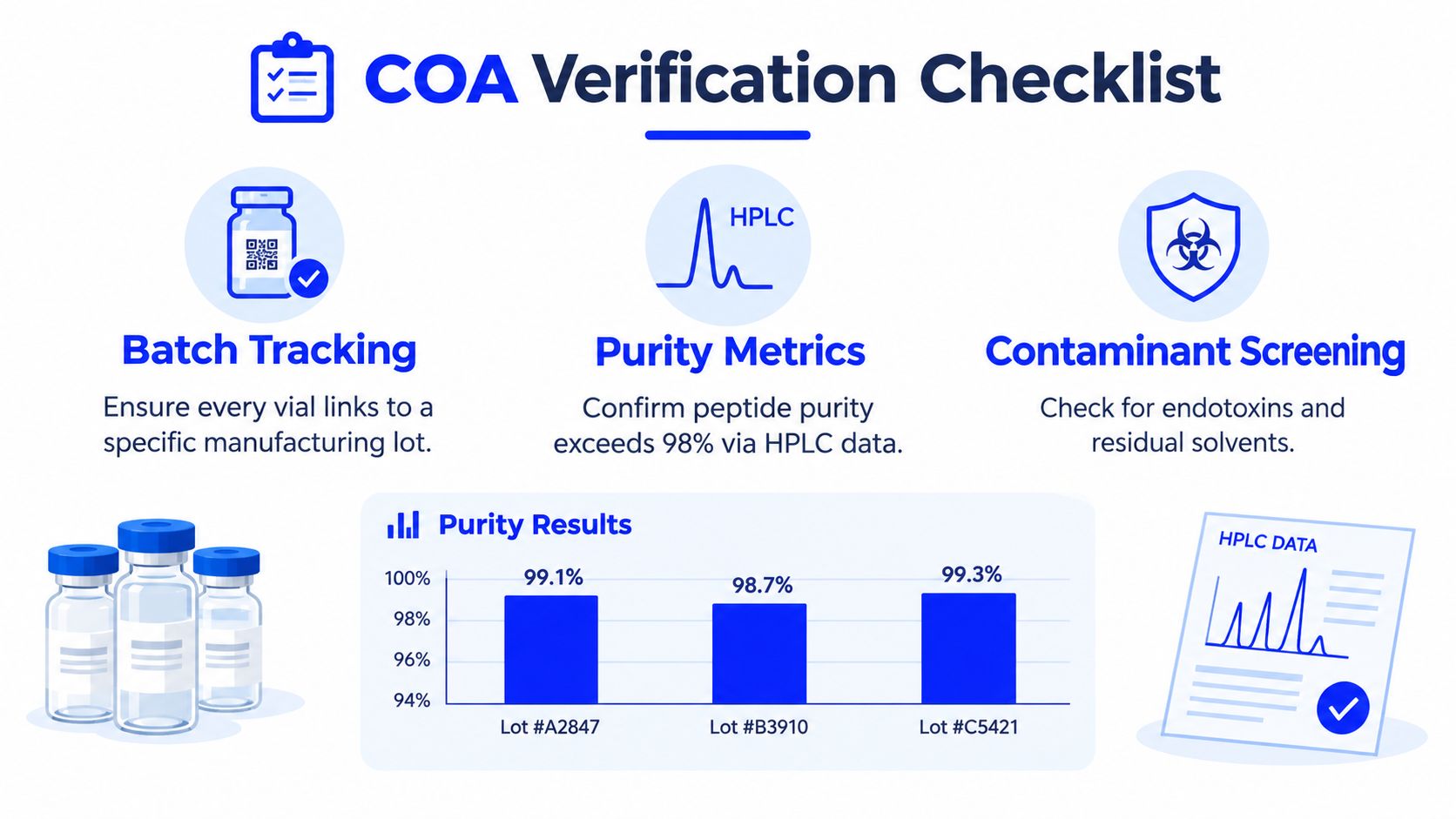
The lot number on the container should match the lot number on the COA. Check the product name, sequence or molecular description, manufacturing date where provided, test date, sample description, and issuing laboratory. A document that lists only a product name without a traceable batch reference doesn't establish that the tested sample is the same material on your shelf.
Review the analytical method next. HPLC can provide a chromatographic purity profile, but the result should be interpreted alongside the method, chromatogram, integration approach, and stated acceptance criteria. A single purity number without supporting data gives the reviewer little insight into unresolved peaks, degradation products, or method suitability.
Mass spectrometry supports identity and mass confirmation. For a peptide fragment, sequence and molecular identity matter because a related fragment, truncation, oxidation product, or synthesis impurity may produce a materially different research input. The FDA describes TB-500 as a synthetic N-acetylated heptapeptide containing amino acids 17 through 23 of thymosin beta-4, with the sequence LKKTETQ in its regulatory discussion of TB-500. That definition gives the laboratory a specific identity framework to compare against supplier documentation.
Microbial testing and endotoxin testing should be reviewed separately from chemical purity. A high chromatographic purity result cannot answer whether a material contains biological contaminants, and a mass confirmation cannot replace an endotoxin assessment. Residual solvents, water content, and other process-related impurities may also matter depending on the intended assay.
Use a documented review sequence:
For laboratories developing or transferring chromatographic methods, Verbal Experiment SST tips can help explain how system suitability supports confidence in an analytical run. The resource is useful because a COA is only as meaningful as the method used to produce it.
Don't accept a COA with unexplained inconsistencies, missing signatures, unclear test methods, or a product description that doesn't match the research material. If the capsule format includes excipients, ask whether the reported purity applies to the intact capsule contents, the extracted active, or a different sample preparation. Those are not interchangeable claims.
Convenient packaging does not establish molecular identity or oral viability. Procurement starts by separating the material under investigation from the parent protein and from claims made in promotional literature. TB-500 is commonly discussed alongside thymosin beta-4, but the FDA regulatory description identifies TB-500 as a synthetic N-acetylated heptapeptide corresponding to amino acids 17 through 23 of thymosin beta-4, with the sequence LKKTETQ. That definition describes a fragment. It does not show that a commercial capsule contains the full-length parent molecule or that the fragment survives gastrointestinal processing in an active form.
The distinction affects purchasing records, assay design, labeling, and institutional review. Evidence concerning thymosin beta-4 should not be presented as direct human evidence for an oral capsule containing a synthetic fragment. Research on the parent molecule includes early human programs, a completed Phase II study in acute myocardial infarction, and a congenital heart surgery study involving 12 children up to four months old, but those facts describe thymosin beta-4 research rather than validated oral TB-500 capsule performance, as discussed in the published review.
The FDA document describes proposed TB-500 products for intramuscular or subcutaneous injection and states that TB-500 is not being added to the 503A bulks list. Neither point validates oral capsules. Each procurement file should therefore identify the exact product description, stated route, intended research use, and applicable regulatory status. A capsule label alone cannot substitute for formulation-specific stability, release, or pharmacokinetic evidence.
Sports work requires a separate compliance review. Australia's Sport Integrity guidance on thymosin beta-4 states that thymosin beta-4 is not approved for human use anywhere in the world and is prohibited in sport at all times. Institutions working with athletes should consult their compliance officer and anti-doping specialist before purchasing, storing, or testing related materials.
Keep sequence records, supplier descriptions, safety documents, and approvals together. This record prevents a parent molecule from being confused with a fragment, a research reagent with an approved medicine, or an injection-related definition with evidence for oral delivery.
Peptide integrity can deteriorate before the first assay if the team treats storage as an afterthought. The receiving procedure should document the shipment condition, container integrity, lot number, storage assignment, and any deviation observed during transit.
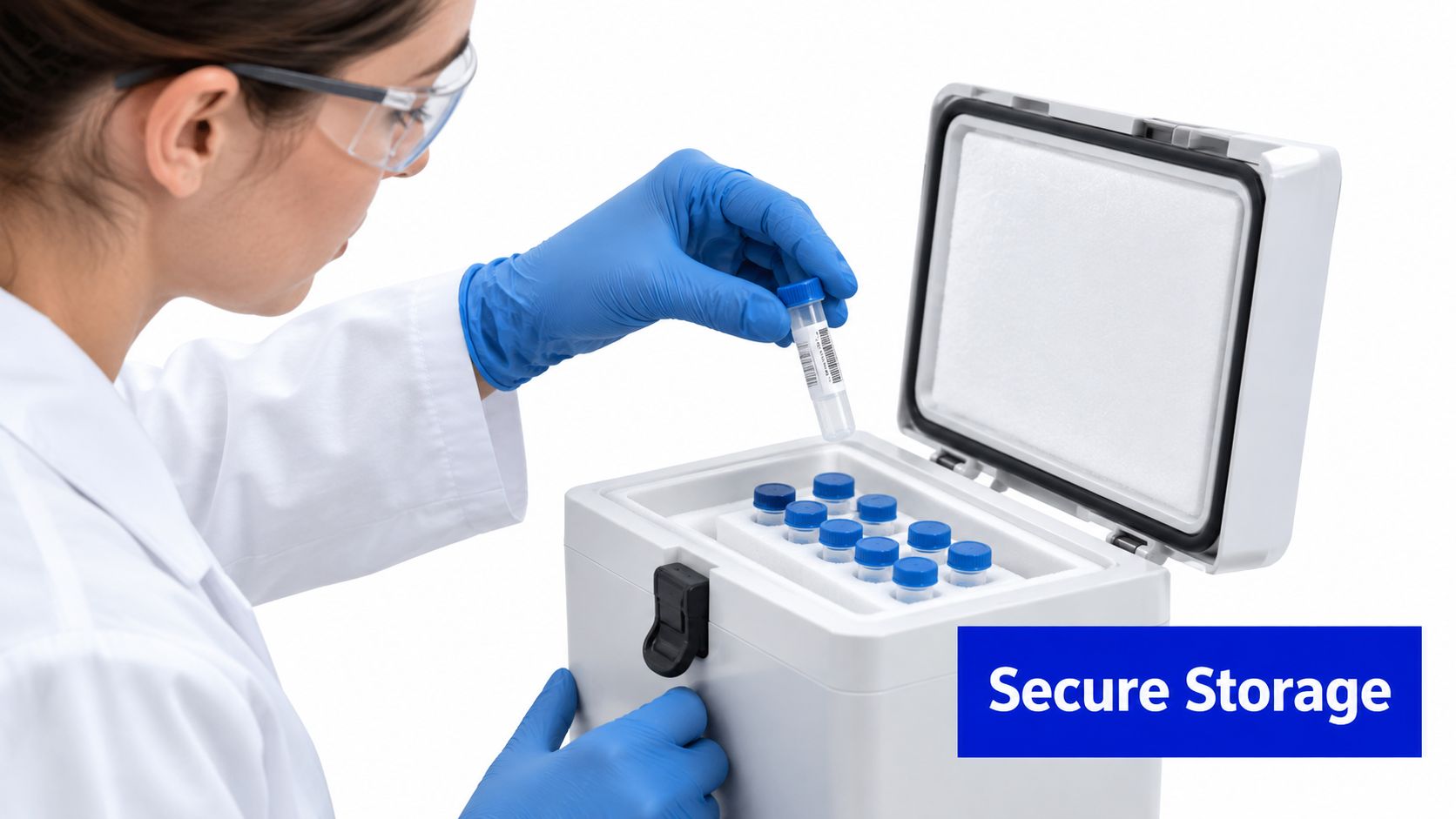
Use the supplier's documented storage requirements and the laboratory's validated temperature-monitoring system. Protect dry peptide material from moisture, unnecessary light, repeated temperature cycling, and avoidable opening of the container. Capsules need particular attention to humidity and shell condition, while lyophilized vials require protection from moisture before reconstitution.
A sound storage SOP should define:
Do not create an arbitrary use-by period for a reconstituted solution. The laboratory should use manufacturer stability data or generate a stability protocol that evaluates the actual concentration, container, solvent, temperature, and handling pattern. Visual clarity alone isn't enough to confirm peptide integrity.
This short laboratory demonstration can provide useful context for teams reviewing vial handling and storage practices:
Use sterile technique for any preparation that will enter a biological workflow, but don't confuse sterile handling with sterility assurance. The material, solvent, container, workspace, and procedure each contribute to contamination control. If endotoxin or microbial status matters to the assay, verify it through appropriate testing rather than inferring it from careful handling.
A reliable procurement workflow ends with a documented release decision, not with a successful checkout. The purchasing team, principal investigator, laboratory manager, and compliance officer should agree on what the material is, how it will be used, and which documents must be present before the batch is accepted.
Research chemical suppliers and compounding pharmacies serve different functions. A research supplier may provide material for laboratory, analytical, or preclinical work, but that doesn't make the product an approved medicine or authorize human administration. Keep the intended-use statement visible in purchase records, inventory systems, protocols, and staff training.
Assess a prospective supplier against the workflow your institution can audit:
A supplier's stated purity level is only one part of the decision. The lab also needs a material it can identify, test, store, and defend during an audit. For teams planning broader material-flow or laboratory logistics work, drug development solutions provides useful context on how handling requirements fit into development operations.
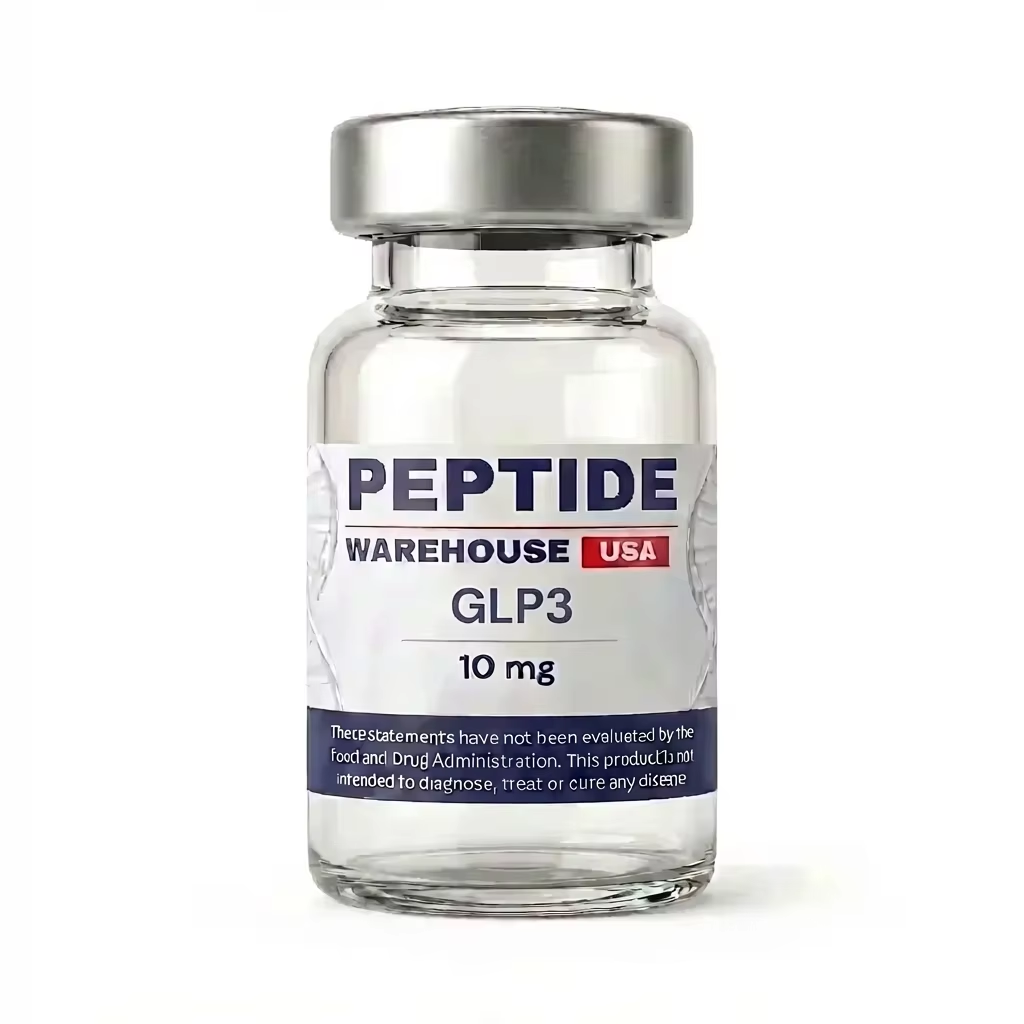
Peptide Warehouse USA offers research-use peptides, including TB-500 in lyophilized powder form, with batch documentation and laboratory-use positioning. The company states that its products are for research, analytical, or preclinical applications rather than human consumption, so researchers should still review each lot's documentation and align any purchase with institutional procedures.
The most defensible approach is simple: define the research question first, select a format that can answer it, verify the lot analytically, document storage and handling, and quarantine anything that fails review. For oral formulations, don't claim systemic exposure until the formulation and analytical method demonstrate it.
If your lab needs a traceable starting point for peptide research, review the documentation and lyophilized TB-500 options available from Peptide Warehouse USA. Compare the available batch records with your institution's COA, storage, and compliance requirements before placing an order.
Leave a comment