
No products in the cart.



What should a researcher trust first, the dramatic weight-loss number on a trial headline or the identity and stability data attached to the vial on the bench? Tirzepatide research needs both. Clinical results show why the molecule matters, but molecular design, pharmacokinetics, and analytical documentation determine whether a laboratory result is interpretable.
This guide connects those layers without turning research material into prescribing advice. You'll see how dual GIP and GLP-1 receptor activity works, why a fatty-acid conjugate supports once-weekly exposure, what the major trials established, and which HPLC, mass-spectrometry, stability, and certificate-of-analysis details deserve scrutiny before a peptide enters a workflow.
Why has tirzepatide become a useful reference compound rather than just another promising incretin? The answer lies in the connection between clinical evidence and bench-level verification. Its synthetic dual incretin agonist design activates both GIP and GLP-1 receptors, giving researchers one peptide for examining coordinated signaling instead of comparing separate single-target compounds.
Clinical results provide a defined point of comparison. In the 72-week SURMOUNT-1 obesity trial, Lilly reported weight reductions of 22.5% at the 15 mg dose, compared with 2.4% for placebo. Reported reductions were 16.0% at 5 mg, 21.4% at 10 mg, and 22.5% at 15 mg (Lilly's SURMOUNT-1 results). These dose-separated outcomes give laboratory teams a clinical framework for interpreting concentration-response studies, while keeping assay results distinct from patient outcomes.
Longer follow-up extended the question from short-term efficacy to disease progression. Lilly reported a 94% reduction in progression to type 2 diabetes versus placebo among adults with pre-diabetes and obesity or overweight over a 176-week study period. Related results reported diabetes development in 1.3% of participants receiving tirzepatide and 13.3% receiving placebo (Lilly's long-term diabetes-prevention report). For researchers, the finding supports interest in durability, but it does not replace direct measurements of identity, purity, or stability in a vial.
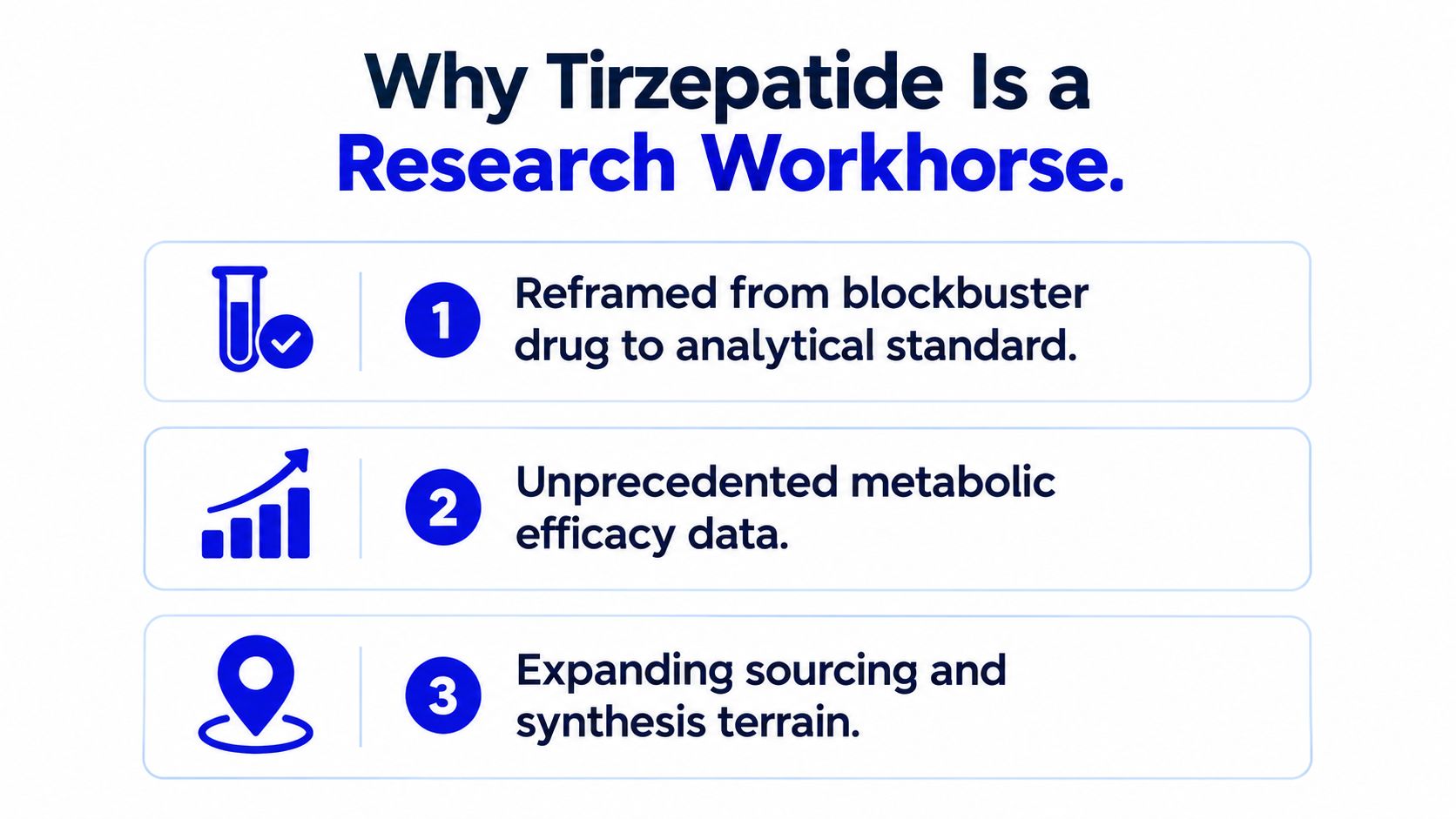
Tirzepatide can serve as:
That final feature affects daily workflow. Fatty-acid conjugation can influence chromatographic retention, sample preparation, and stability behavior, so a supplier's “high purity” label is only a starting point. Before trusting a vial, verify peptide identity, the chromatographic profile, lot traceability, and storage and handling information. Those records connect the clinical reference compound to an interpretable laboratory result.
Here, research use means bench-level chemistry, analytical, and preclinical workflows. It excludes clinical prescribing, self-administration, and any substitute for regulatory or institutional oversight.
A useful analogy is to think of GIP and GLP-1 as two radio stations broadcasting into the same metabolic control room. GLP-1 signaling is associated with appetite regulation, delayed gastric emptying, glucagon suppression, and glucose-dependent insulin secretion. GIP signaling contributes another insulinotropic signal and has distinct effects in metabolic tissues.
Tirzepatide is engineered to activate both receptor systems. Published pharmacology describes a molecule that binds the GIP receptor with affinity comparable to native GIP, while its GLP-1 receptor affinity is about fivefold weaker than native GLP-1 (published tirzepatide pharmacology). That doesn't make the GLP-1 arm irrelevant. It means researchers should avoid describing the molecule as a simple copy of a GLP-1 agonist with an extra label attached.
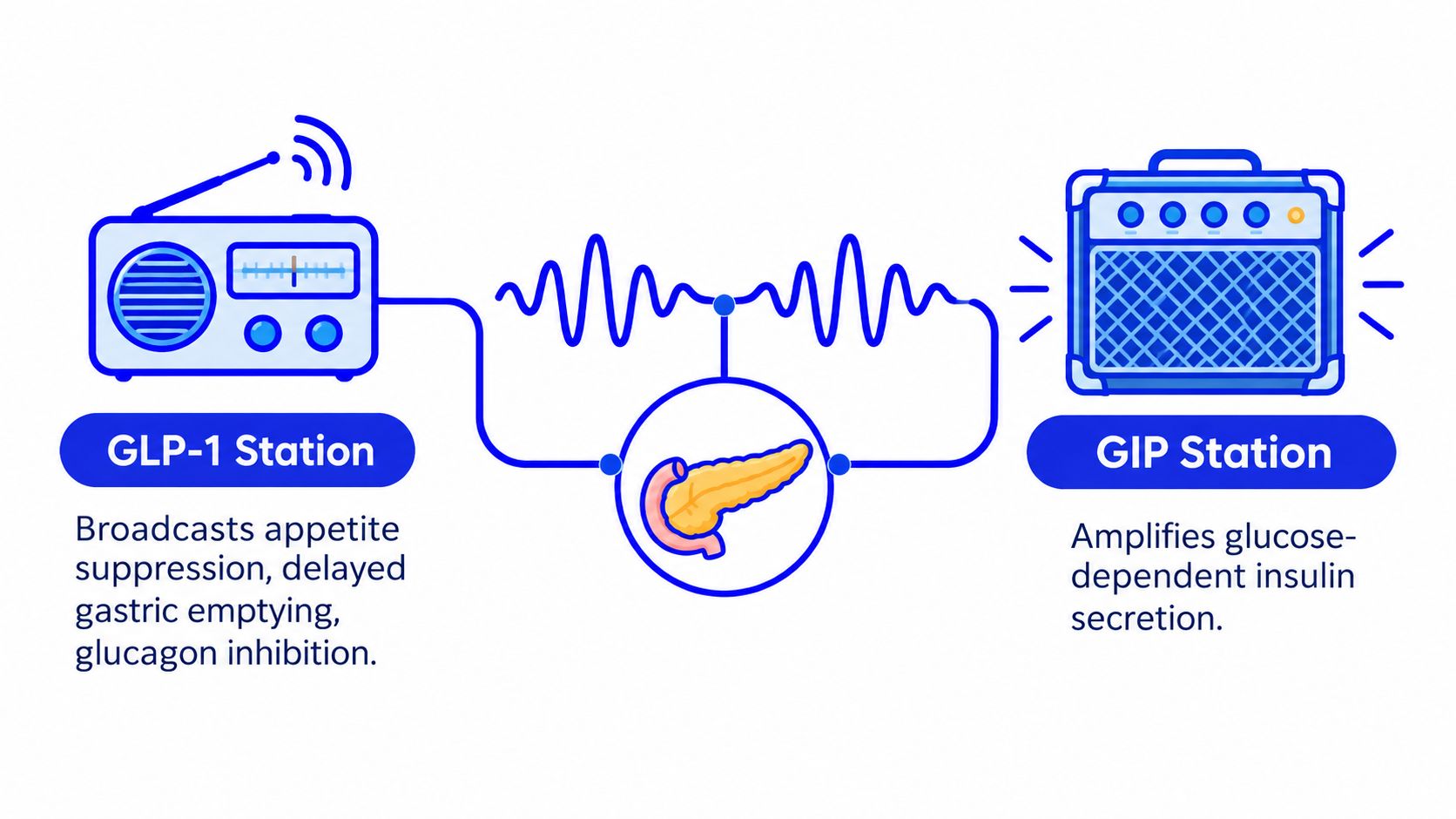
At the cellular level, receptor activation changes intracellular signaling, including cyclic AMP pathways. The practical research question isn't whether a receptor responds. It's whether the batch, assay system, concentration range, and readout produce a reproducible response.
That's why dual agonism creates both scientific interest and analytical responsibility:
The biological result is a combined signal that can influence insulin secretion, appetite-related pathways, and glucose regulation. The clinical trial outcomes are the result of many interacting factors, not a single receptor switch. Researchers should therefore keep receptor potency, exposure, formulation, and study population separate when interpreting results.
Practical rule: A strong clinical headline doesn't replace a validated receptor assay. It tells you why the compound deserves investigation, not whether your specific vial performs as expected.
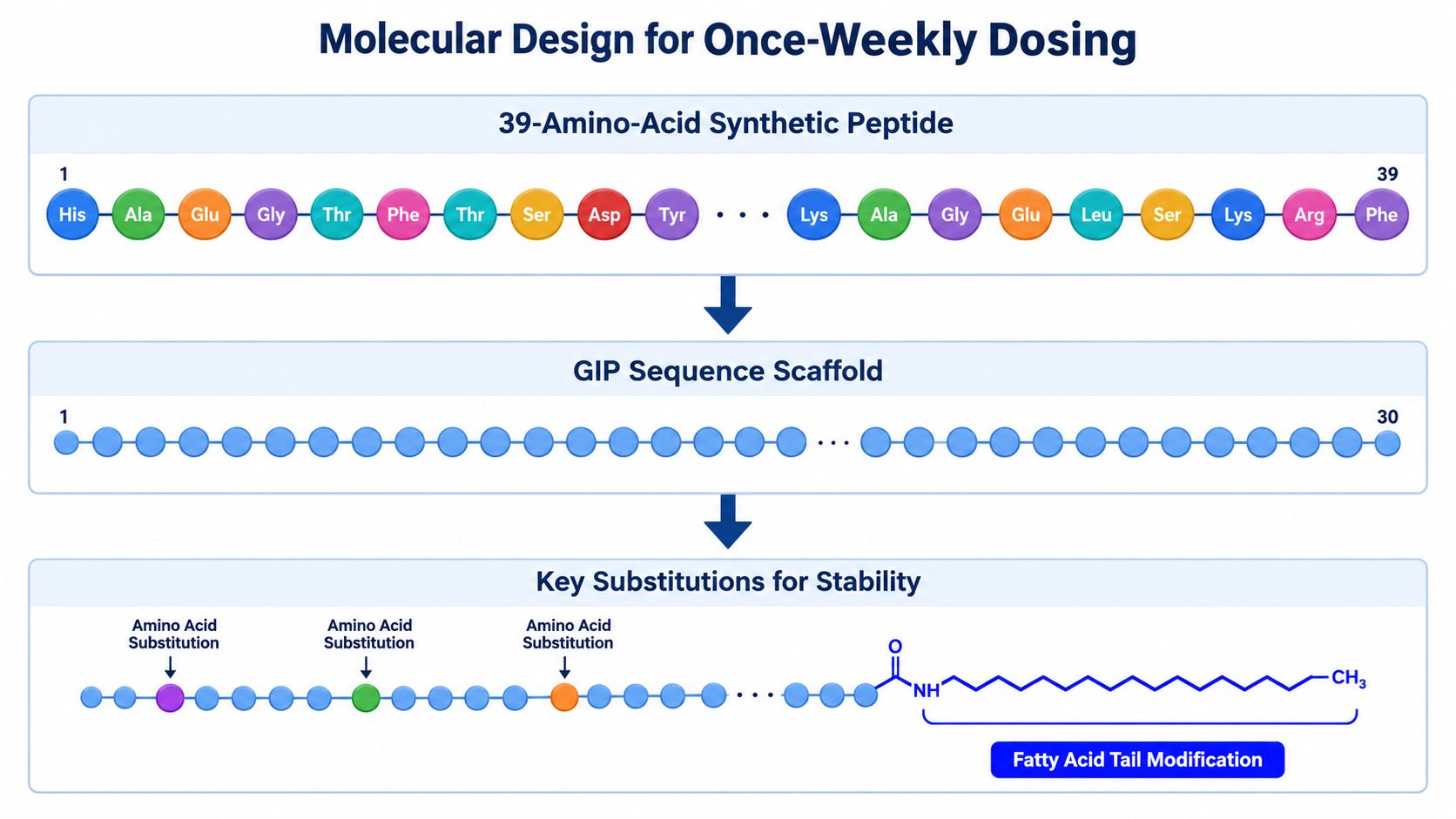
Tirzepatide makes more sense when viewed as a molecular blueprint. It's a synthetic linear peptide of 39 amino acids, conjugated to a C20 fatty acid through a linker attached to lysine at position 20. That lipid modification isn't decorative. It changes how the molecule behaves in circulation and helps prolong its action (structural and pharmacological review).
The peptide sequence and the lipid tail create separate analytical fingerprints. The amino-acid chain influences intact-mass measurements and peptide-mapping results. The fatty-acid conjugate changes hydrophobicity, which affects reversed-phase HPLC retention and can influence aggregation or adsorption during sample preparation.
The compound's pharmacology reviews describe it as a biased dual agonist, with signaling behavior that favors cAMP over β-arrestin recruitment at the GLP-1 receptor. For a lab, that means the biological readout depends on more than receptor occupancy. Assay construction, cell background, incubation conditions, and detection method can all shape the observed response.
The lipid-linked design also makes formulation a serious variable. Researchers should document:
Tirzepatide's architecture differs from semaglutide's lipid-linker arrangement, so the two compounds shouldn't automatically share the same chromatographic method, dilution protocol, or stability assumptions. A certificate of analysis should make sense alongside the structure. If the supplier provides no intact-mass evidence, no chromatogram, or no explanation of the stated counter-ion, the documentation is incomplete from a research perspective.
What does SURMOUNT-1 show when its headline numbers are translated into a laboratory workflow? Over 72 weeks, mean weight reduction reached 16.0% at 5 mg, 21.4% at 10 mg, and 22.5% at 15 mg, compared with 2.4% for placebo, as noted earlier. The figures establish a clinical benchmark, but they do not by themselves identify how a vial, assay system, or experimental model will behave.
Participants progressed through dose escalation before entering maintenance treatment. That distinction matters when comparing exposure, biomarkers, or pharmacodynamic readouts. An early escalation sample and a later maintenance sample may come from the same treatment arm, yet represent different exposure conditions. Record the dose phase alongside the sample, rather than treating the treatment-arm label as sufficient context.
The clearest pattern is separation between the tested doses. Higher doses produced larger average weight reductions in this study, under its specific population, protocol, duration, and analysis plan. Those results describe a group-level response. They do not predict an individual result or transfer directly to an unrelated cell, animal, or biochemical model.
| Dose | Mean weight reduction | ≥5% weight loss | ≥20% weight loss |
|---|---|---|---|
| 5 mg | 16.0% | Not specified in the verified data | Not specified in the verified data |
| 10 mg | 21.4% | Not specified in the verified data | Not specified in the verified data |
| 15 mg | 22.5% | Not specified in the verified data | Not specified in the verified data |
| Placebo | 2.4% | Not specified in the verified data | Not specified in the verified data |
The reported absolute changes were about 35 lb, 49 lb, and 52 lb for the 5 mg, 10 mg, and 15 mg groups, respectively (SURMOUNT-1 trial results). These values make the intervention's scale easier to communicate, while still requiring the original baseline weight and study population for proper interpretation.
SURMOUNT-1 gives metabolic researchers a reference curve for discussing newer incretin candidates. It also keeps three variables connected: dose, duration, and endpoint definition. A compound can resemble the reported percentage while differing in sequence, formulation, exposure, assay conditions, or study design. Before accepting a result as comparable, verify the molecule's identity and analytical record, then check whether the biological experiment matches the clinical context closely enough to support the comparison.
Short trials show whether tirzepatide can change a measured endpoint. Long-term studies ask a different set of questions: does the effect persist, what follows treatment interruption, and does metabolic risk track with body weight over time?
The extended SURMOUNT-1 follow-up reached 176 weeks, described by Lilly as the longest completed tirzepatide study at that point. Lilly reported a 94% reduction in progression to type 2 diabetes versus placebo. Related follow-up reporting found that 677 participants, or 65.6%, completed through 193 weeks (long-term SURMOUNT-1 reporting).
Stopping treatment introduces a separate biological and operational test. Weight regain, maintenance of metabolic improvements, and the timing of changes after the final dose remain important evidence gaps. A 2026 systematic review identified discontinuation, weight-loss maintenance, and weight regain as unresolved areas. A summary of WHO-commissioned reviews reported about 16% average weight reduction after 12 to 18 months and noted that some benefits may persist up to 3.5 years, although long-term safety data remain limited (2026 review of durability evidence).
For laboratory planning, durability is also a materials problem. Extended exposure, treatment interruption, sample integrity, and lot continuity can affect interpretation. A single endpoint cannot capture those variables.
For study planning: Long-duration work needs more than enough peptide. Prepare a documented inventory plan, consistent lots, stability evidence, and a protocol that records every storage and handling event.
Tirzepatide and semaglutide are often compared as if they were interchangeable versions of the same molecule. They aren't. Tirzepatide activates GIP and GLP-1 receptors, while semaglutide is a selective GLP-1 agonist. That difference changes the biological question before a researcher even chooses a plate reader or PK assay.
Completed randomized trials have consistently shown greater weight and HbA1c effects for tirzepatide than semaglutide in the comparisons summarized by a 2026 narrative review (2026 comparative review). The review also describes a new phase 4 pragmatic study in the UK designed to examine tirzepatide against standard care for weight loss and diabetes prevention in routine practice.
Controlled trials reduce variation. Routine care introduces missed doses, different follow-up patterns, tolerability issues, injection-site reactions, and adherence challenges. The pragmatic study exists because a larger effect under controlled conditions doesn't automatically prove a larger effect across ordinary clinical settings.
The molecular comparison matters in procurement as well. Tirzepatide uses a C20 fatty-acid conjugate, while semaglutide uses a different lipid-linked design. Their chromatographic behavior, albumin interactions, and stability profiles therefore require compound-specific verification.
A fair comparison should ask:
The same sourcing standard applies to both peptides. A familiar name doesn't excuse missing identity data.
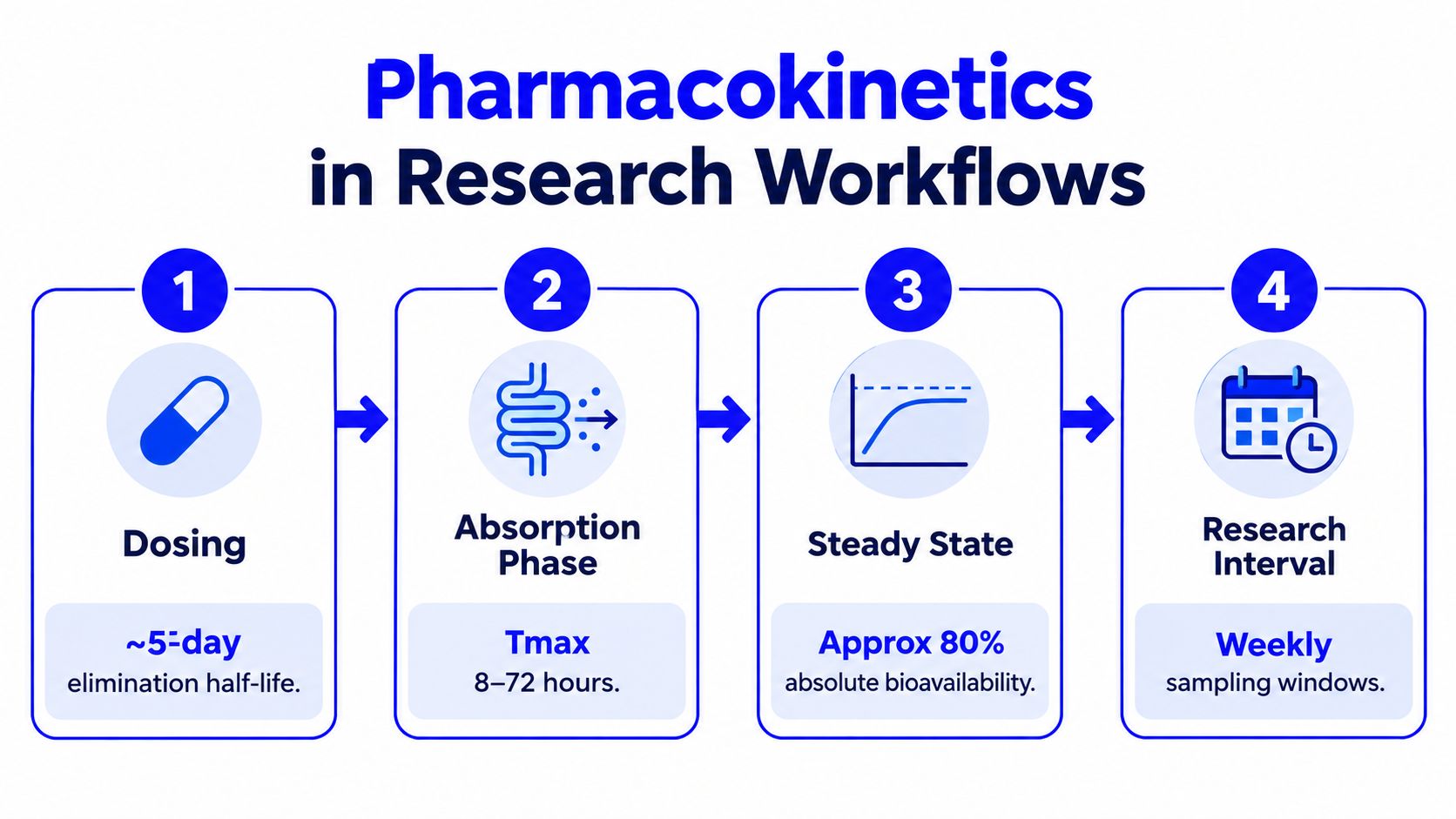
How should a researcher turn tirzepatide's pharmacokinetic profile into a workable sampling plan? Its mean elimination half-life is approximately 116.7 hours, or about five days. In healthy-volunteer studies, peak plasma concentration occurred at about one to two days, while steady state was reached after four weeks (published pharmacokinetic review).
The same review reports dose-proportional exposure across 0.25 to 15 mg, approximately 80% absolute bioavailability after subcutaneous administration, 99% albumin binding, comparable exposure from abdomen, thigh, and upper-arm injection sites, and clearance of 0.061 L/h. These values connect the molecule's fatty-acid design to practical handling: exposure persists, and injection site may not be the main source of variation (pharmacokinetic data).
A half-life of roughly five days allows residual compound to carry across nominal weekly dosing intervals. Repeated-dose studies therefore need an accumulation model, rather than treating every injection as an isolated exposure event. Build sampling windows around the research question, with deliberate coverage of early absorption and later elimination.
Peak timing and steady-state behavior serve different purposes:
The albumin-binding lipid chain also changes assay interpretation. A plasma method reporting total tirzepatide answers a different question from one estimating the unbound fraction. Define that distinction before comparing results between experiments.
For bench work, treat lyophilized reference material and prepared solutions as different sample types. Dry peptide simplifies inventory and limits repeated handling. A working dilution adds container, buffer, temperature, and freeze-thaw variables, all of which belong in the sample record before an unexpected chromatogram appears.
Can you connect the vial on your bench to a verified molecular identity? A reliable tirzepatide workflow begins with identity, purity, and traceability. Because the molecule contains a lipid-linked sequence, the supplier should provide methods suited to its modified structure, not only a rounded purity claim.
Start with these checks:
The certificate of analysis should identify appearance, net peptide content, lot number, test dates, and acceptance criteria. “Research grade” describes a category, not a test result.
Pharmacokinetic properties such as high albumin binding and an approximately five-day half-life are detailed above. They describe behavior in the body, not the shelf life of a particular vial or reconstituted solution. The literature's 80% absolute bioavailability also does not validate a supplier's storage claim.
Ask for compound-specific stability data, storage conditions, and handling instructions. Repeated freeze-thaw cycles, time in solution, container adsorption, and undocumented reconstitution can alter the sample record and complicate chromatogram interpretation. For body-composition endpoints, DEXA body composition testing in Liverpool may help when selecting an external measurement service. That platform still cannot substitute for peptide identity or batch documentation.
Reject or escalate a vial when the documentation shows:
Bench standard: If the vial label cannot be connected to a lot-specific identity result and a clear handling record, the experimental result cannot be confidently attributed to tirzepatide.
Peptide Warehouse USA offers research-use peptides and related compounds for laboratory, analytical, and preclinical applications. Available documentation may include Certificates of Analysis, microbial reports, and endotoxin reports. Review the tirzepatide product information at Peptide Warehouse USA, then verify that the supplied records match your assay, storage, and traceability requirements.
Leave a comment